Skip to content

A question that regularly draws hundreds of comments on TikTok and Reddit is straightforward: how can a spray nozzle mounted inside a toilet bowl stay hygienic for daily rear and feminine washing? That doubt makes sense if you picture an exposed pipe hanging beneath the seat, but modern electric bidet seats are built around physical isolation rather than exposed plumbing.
In practice, bidet nozzle hygiene rests on four verifiable design layers: recessed wand storage behind a rear rim shield, upward-angled extension with dedicated rear and feminine ports, pre- and post-use automatic self-rinsing fed by clean tap water, and smooth materials paired with safe periodic care. Specific mechanical examples below—such as dual ports, powered maintenance extension, or 0.5–0.8 L/min reference flow—come from our Elecbidet Series 3 (330) Chinese AC 220 V / 50 Hz manual solely to illustrate physical structure, not to claim identical regional specs or clinical outcomes.
How Retractable Nozzle Placement and Spray Angle Limit Cross-Contamination
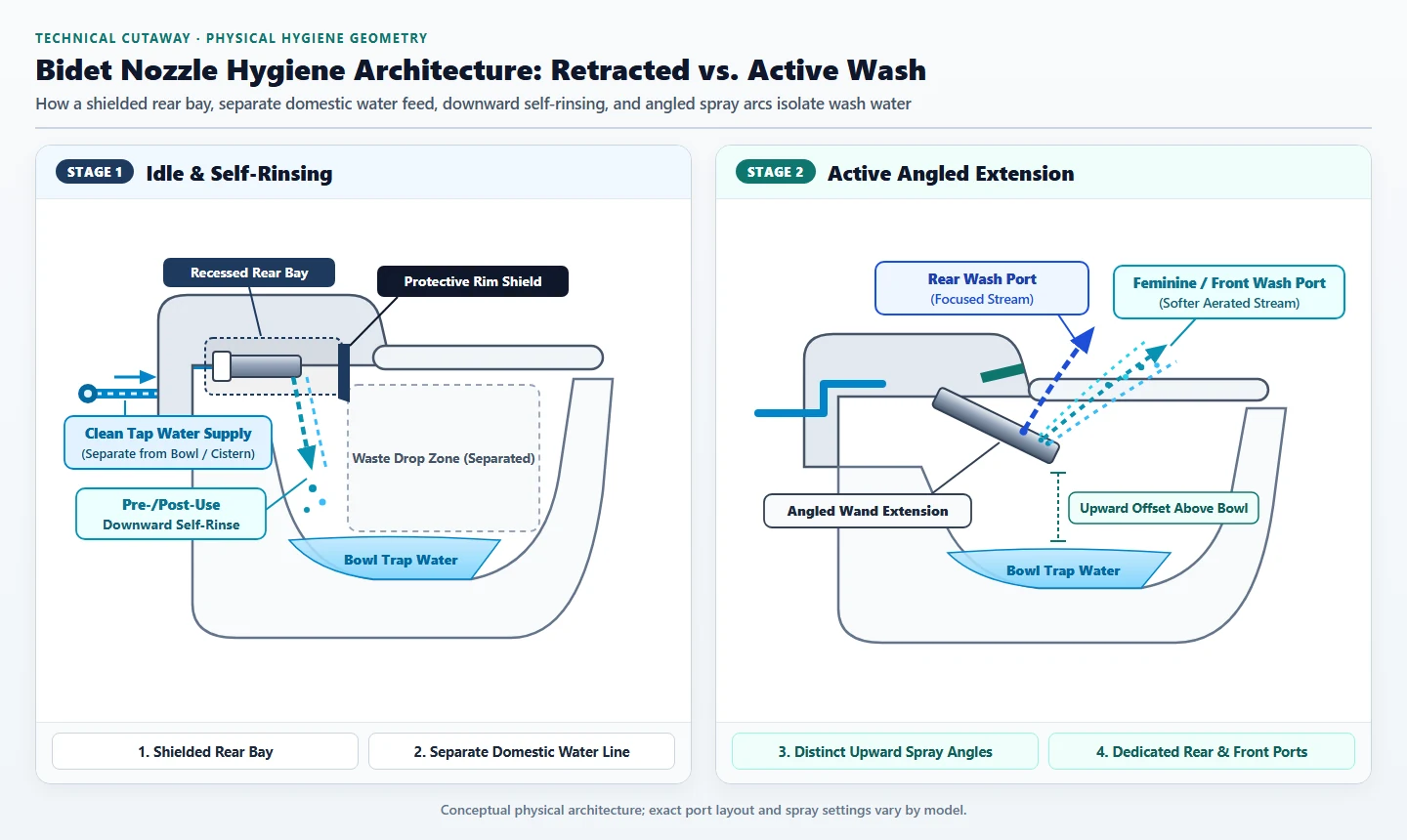
Between uses, an electric bidet wand never sits exposed inside the bowl. When idle, it retracts into a recessed housing bay tucked high behind the rear rim, typically shielded by a protective flap or molded lip. Keeping the bay behind the rear rim places the hardware outside the direct waste drop zone and shields it from routine flushing splash.
The wand extends forward only after the seat sensor confirms occupancy and a wash command is pressed. Even while active, the shaft remains toward the rear and projects water upward at a forward diagonal rather than hovering underneath the user, allowing spent rinse water to fall directly into the bowl instead of washing back over the nozzle.
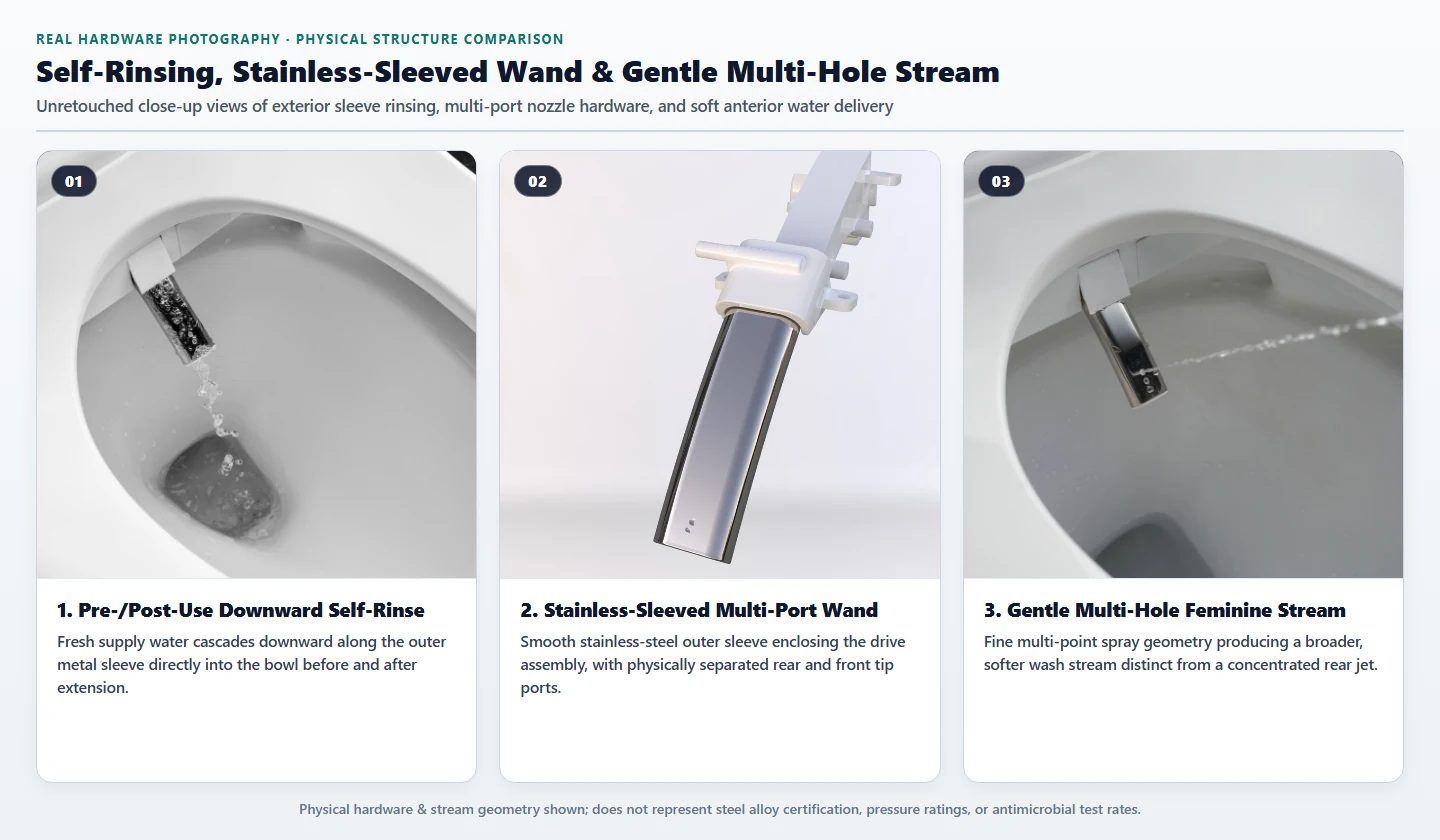
For feminine (front) wash, dedicated tip geometry matters even more. Rather than pushing rear-zone water forward, properly engineered wands separate rear and front outlets at the nozzle head. In our Series 3 (330) manual layout, a dedicated feminine wash port sits slightly forward of the rear port and produces a gentler, multi-hole aerated stream at a distinct upward angle (within an overall 0.5–0.8 L/min reference flow band). Forward/backward position adjustments let users align the front stream cleanly and minimize backsplash.
Self-Cleaning Water Paths, Backflow Logic, and Nozzle Materials
Recessed storage is only half the equation. Internal water routing, backflow separation, and surface materials determine how reliably a bidet seat stays clean over years of home or commercial service.
- Pre- and post-use automatic self-rinsing: Before extending—and again while retracting—clean tap water flushes downward over the outer sleeve inside the recessed bay. Physically, this clears fresh droplets and light surface residue before they dry; it does not remove hardened mineral scale or replace periodic manual inspection.
- Clean domestic water path and tankless flow: Electric bidet seats tap into the household cold-water supply valve via a T-connector and never draw water from the toilet bowl or cistern. Tankless instantaneous-heating models warm incoming water on demand as it flows, avoiding stagnant warm water in a standing reservoir. Internal check-valve and backflow-prevention pathways—configured for target-market plumbing codes—keep bowl zones isolated from potable water lines, while optional external inline filters help protect micro-ports from sediment.
- Nozzle materials and removable vs. fixed tips: Wands generally use either smooth engineered resin or a stainless-steel outer sleeve paired with a precision-molded resin tip. Stainless sleeves resist surface scratching and staining during wiping, while molded resin supports fine multi-hole aeration for softer front wash streams. Some seats feature detachable spray caps for soaking or replacement, while others use sealed fixed tips—always verify your manual before pulling or twisting.
- Optional UV lamps and antibacterial materials (evidence boundary): Certain retail or project specs list optional UV nozzle lamps or antibacterial resin additives. At Elecbidet, UV modules and antibacterial coatings are strictly optional customer-version configurations, not universal defaults across every series, and surface additives or optional lamps are distinct from independent clinical efficacy proof. For B2B documentation standards, see our waterproof rating and antibacterial coating verification guide.
Hygiene Spec Comparison & B2B/OEM Verification Checklist
Whether comparing seats for a home bathroom or auditing drawings for a hospitality or OEM program, use the table below to check each physical hygiene layer.
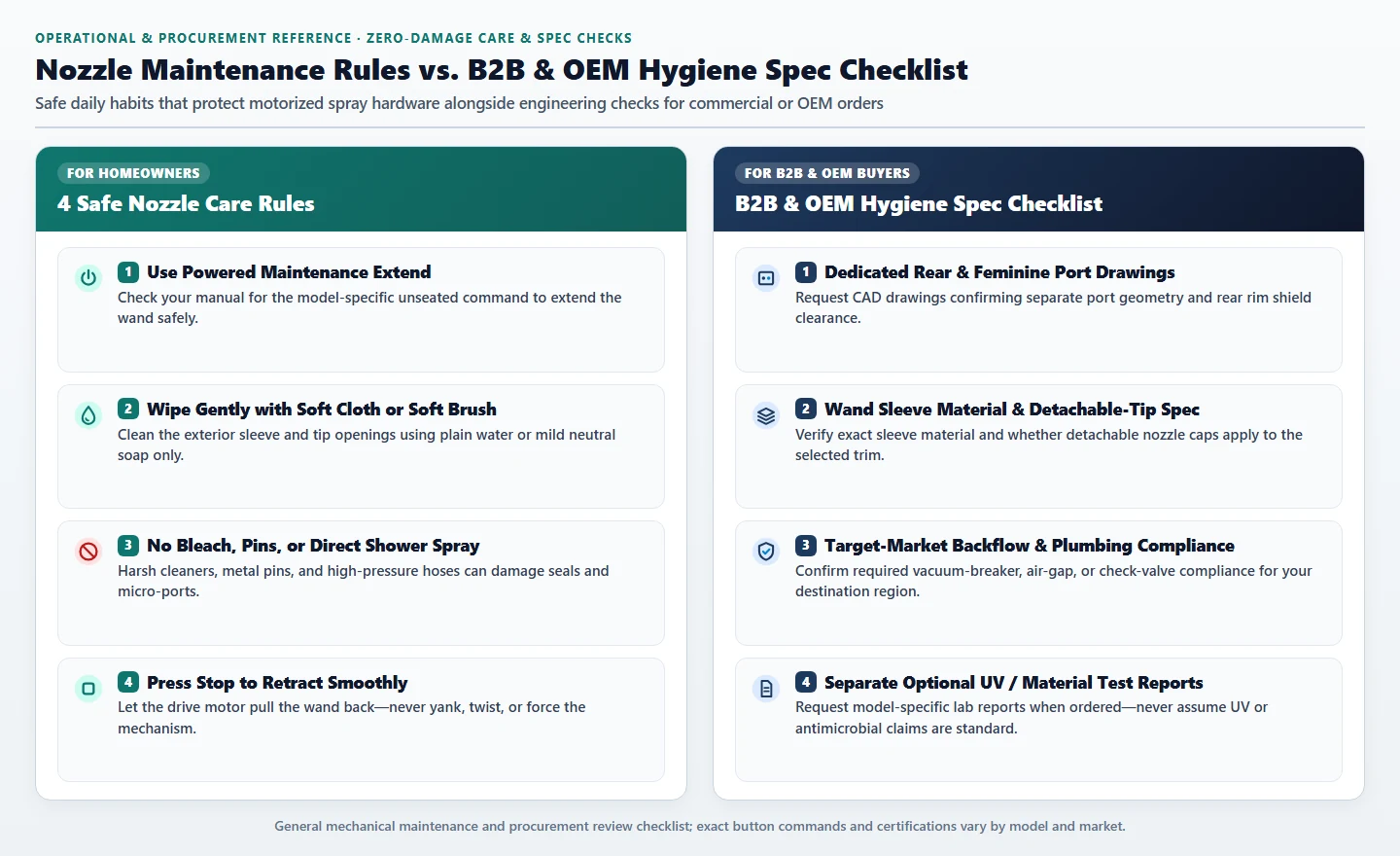
| Hygiene Component | Physical Mechanism | Home Buyer Check | B2B / OEM Verification |
|---|---|---|---|
| Retracted Wand Bay | Parks wand behind rear rim pocket/flap outside the direct drop zone. | Check smooth retraction and easy cloth access around the rim flap. | Review CAD clearance, flap closure tolerance, and splash shield. |
| Rear vs. Feminine Ports | Separates focused rear jet from gentler multi-hole angled front stream. | Look for dedicated Rear/Feminine buttons plus nozzle position control. | Verify dual-port tip drawings, flow bands, and oscillation durability. |
| Automatic Self-Rinsing | Flushes fresh supply water downward over the sleeve before/after use. | Confirm automatic cycle; still schedule light monthly wiping. | Audit rinse timing logic, valve cycle life, and rinse water path. |
| Water Path & Backflow | Draws only from cold supply valve; isolates potable upstream lines. | Confirm T-valve cold hookup and tankless vs. tank water path. | Verify regional backflow/air-gap code compliance and filter options. |
| Wand Material & Tip | Stainless-sleeved shaft or smooth resin; fixed or removable cap. | Confirm in the manual whether the tip detaches before twisting. | Request material specs (never assume alloy grade) and spare-tip BOM. |
| Optional UV / Coatings | Customer-selected UV module or surface resin additive on select SKUs. | View as a secondary feature—never a replacement for routine wiping. | Confirm SKU option status and request separate material test reports. |
Safe Nozzle Maintenance Without Damaging the Mechanism
Even with automatic self-rinsing, tap-water minerals and bathroom dust collect gradually around the nozzle pocket. Follow four practical rules—alongside our full guide on how to clean a bidet seat safely—to preserve surface cleanliness and drive gears:
- Use powered maintenance extension: Trigger the unseated nozzle-cleaning command so the motor extends smoothly (note trim differences—for example, the PRO variant in our 330 manual does not auto-extend unseated). Always press Stop to retract.
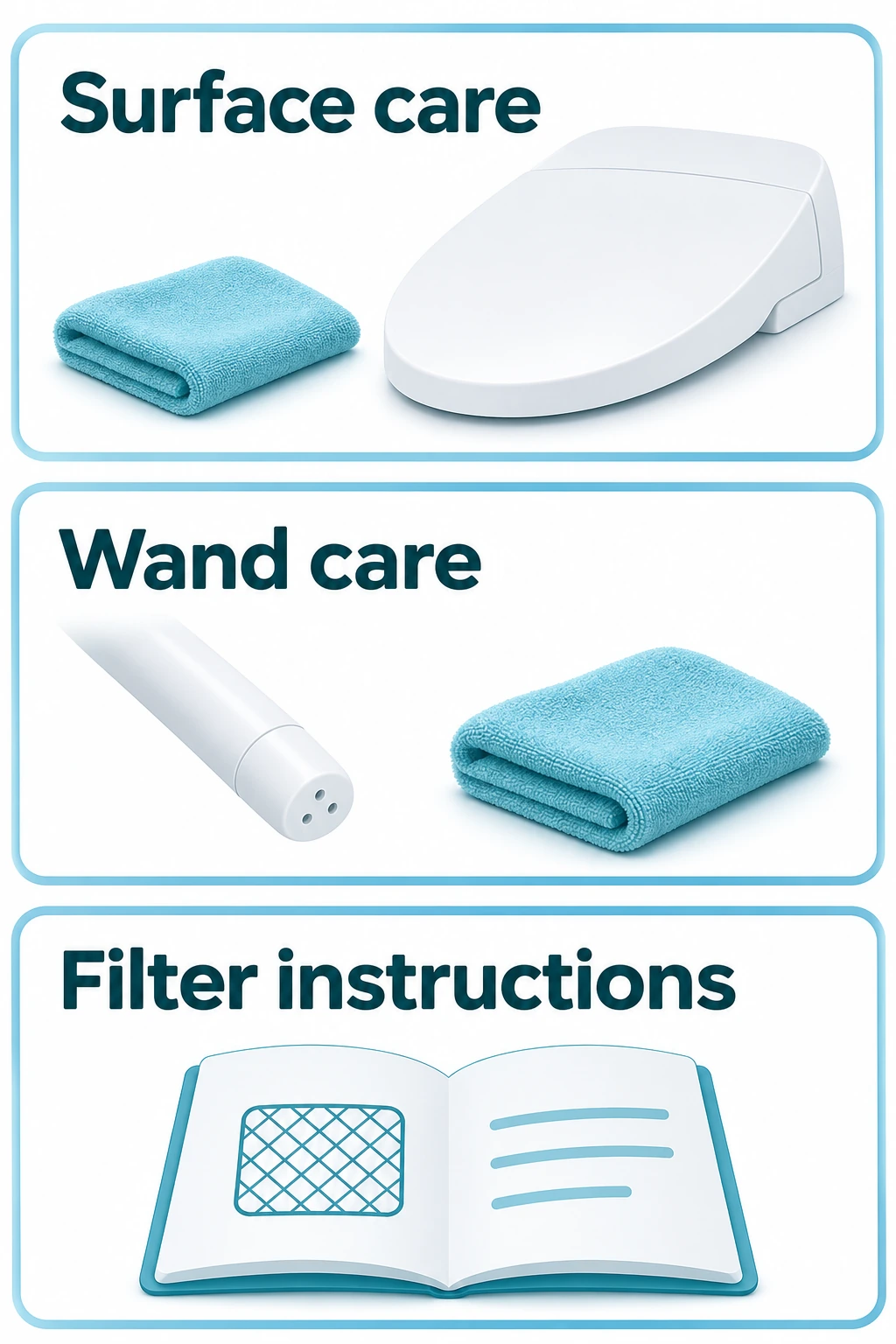
- Wipe gently with soft tools: Clean the sleeve and ports with a soft damp cloth or soft-bristled brush using plain water or mild neutral soap. Never pull, twist, or bend a motorized wand, and never clear ports with pins.
- Avoid harsh chemicals and direct sprays: Keep bleach, acidic bowl cleaners, abrasive powders, and handheld showerheads away from the recessed bay and housing seams. Unplug before wiping the exterior with a wrung-out soft cloth.
- Check detachable tips and inlet filters: Remove a nozzle cap only when the manual confirms it is detachable, and rinse or replace inline sediment filters whenever spray streams narrow.
Choosing a Hygiene-First Bidet Seat for Homes or Commercial Projects
Dependable bidet nozzle hygiene comes from disciplined engineering—clean supply separation, shielded retraction, dedicated feminine spray geometry, and accessible maintenance—not inflated claims. Homeowners can compare port separation, tankless direct feed, and cleaning controls across our smart bidet seat range.
For hospitality teams, distributors, and OEM buyers specifying regional backflow compliance, stainless-sleeved wands, or optional customer-version configurations, contact our engineering team to review drawings, samples, and applicable test documents.
Frequently Asked Questions
Does a bidet nozzle spray water from the toilet bowl?
No. An electric bidet seat connects via a T-valve to the household cold-water supply pipe behind the toilet. Its wash tubing never draws water from the bowl or flush cistern.
How is feminine wash different from rear wash on a smart bidet seat?
Feminine (front) wash uses a dedicated port positioned further forward on the wand, producing a gentler, multi-hole aerated stream at a distinct upward angle instead of reusing the focused rear jet.
If a bidet nozzle is self-cleaning, do I still need to wipe it manually?
Yes. Automatic self-rinsing flushes fresh droplets off the outer sleeve, while periodic gentle wiping removes tap-water mineral scale and dust around the nozzle pocket.
Are stainless-steel nozzles always cleaner than resin nozzles?
Not automatically. Stainless sleeves resist minor surface scratches during wiping, while molded resin supports fine multi-hole spray tips. Cleanliness still relies on shielded retraction, self-rinsing, and routine care.
Do all electric bidet seats include optional UV nozzle lamps?
No. UV modules and antibacterial resin additives are optional customer-version configurations rather than universal standard features, and never substitute for clean water-path design and periodic care.
Are electric bidet seats medical devices for intimate care?
No. Electric bidet seats are personal hygiene plumbing fixtures designed for water-based cleansing comfort, not medical devices. Consult a qualified healthcare professional for any personal health questions.