Skip to content

When reviewing electrical safety documents for a US bidet-seat project, identify what each document does before comparing logos. CB test documents can support further certification applications. A US safety certification mark identifies a particular certification within its scope. Neither label, by itself, answers every question about the offered model or its intended market.
Treat the CB documents as part of a process
UL Solutions’ CB Scheme explanation describes mutual acceptance of test reports among participating certification organizations in specified product categories. It explains that a CB Test Certificate and associated Test Report can support national certification, while applications to the target-country certification bodies remain necessary.
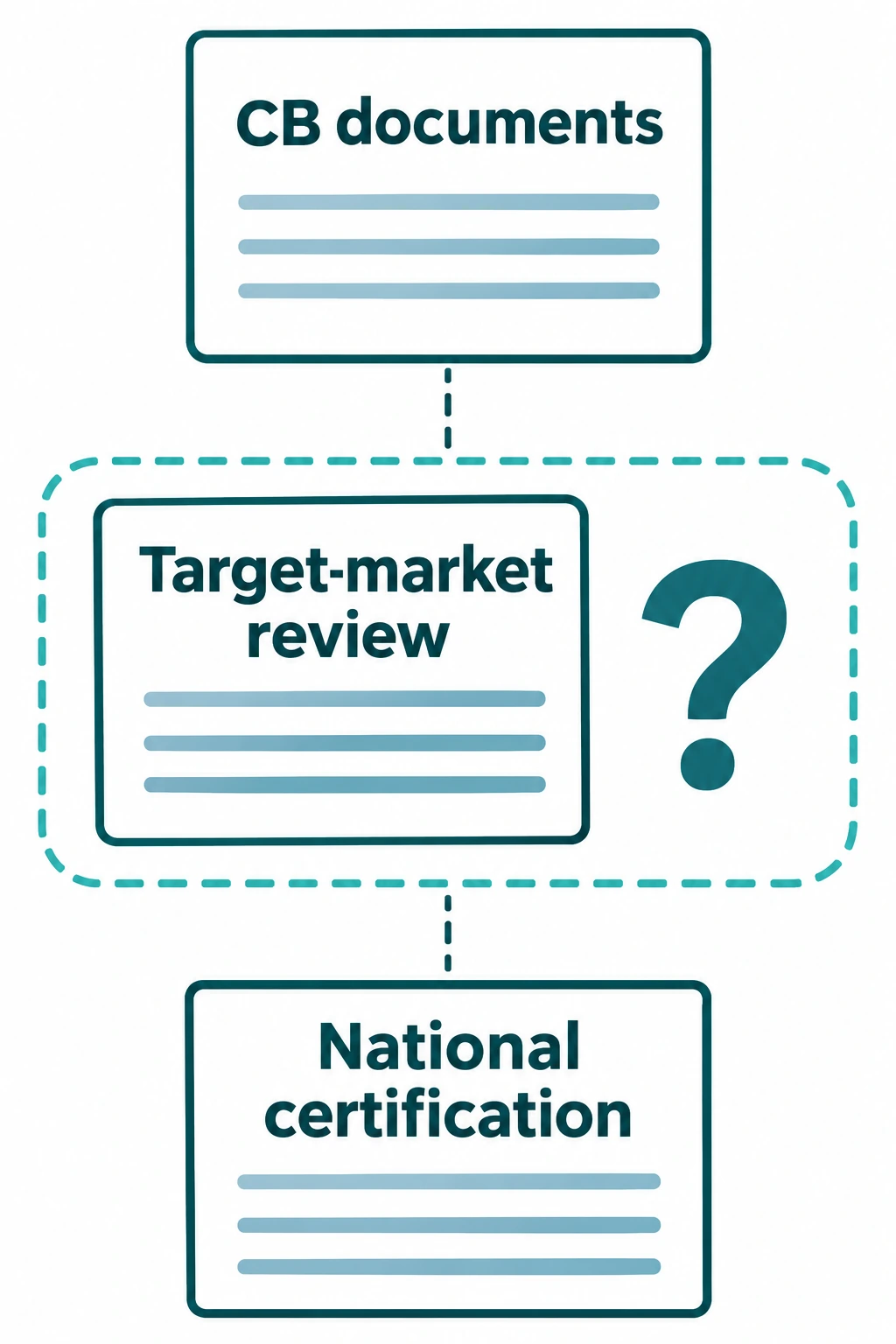
National differences may matter, and a receiving body can request samples or additional information. A CB report is therefore useful evidence in a process; it is not automatic approval for sale in every country. Ask what target-market application the supplier is describing and which steps have actually been completed.
Understand what a US listing mark is identifying
OSHA’s NRTL program recognizes laboratories for specified test-standard scopes. Each recognized laboratory uses its own registered certification marks. Within that program, a mark indicates that the laboratory tested and certified the product to applicable product-safety test standards.
This is an OSHA workplace electrical-safety context, covering construction and general-industry requirements. It is not a rule that every household bidet must carry one particular brand of mark. Keep the testing organization, the cited standard and the certification mark distinct, and establish the requirements for the actual project separately.
Match the documents to the actual configuration
Create one record for the offered configuration and compare it with the supplied documents. The following is a purchasing worksheet, not a universal list of mandatory tests.
| Record | What to match or clarify |
|---|---|
| Product identity | Offered model, variant, brand relationship and the model references shown in the documents. |
| Electrical configuration | Intended market version and the rating/configuration covered by the evidence. |
| Document identity | Certificate or report identifier, issuing organization and the stated scope. |
| Standard reference | The cited standard and edition, plus any stated limitations or national differences. |
| Target-market status | What application or certification is complete, and what remains to be reviewed. |
If the quoted model and report use different names, ask the issuer or responsible certification body to confirm the relationship. A similar enclosure, a logo on a supplier homepage or a report for another family is not that confirmation.
Ask what remains for the target market
Return a short list of unresolved items to the supplier and the issuer or qualified compliance specialist. Request a written answer tied to the model and market, rather than a general assurance that “CB is international” or “UL is covered.”
This guide does not decide the complete route to market or assess every plumbing, electromagnetic-compatibility, radio or labeling obligation. It helps you identify the document’s role and ask a precise follow-up question. When comparing configurations in the smart bidet seat range, keep the supporting documents with the exact configuration; the range listing itself is not certification evidence.